
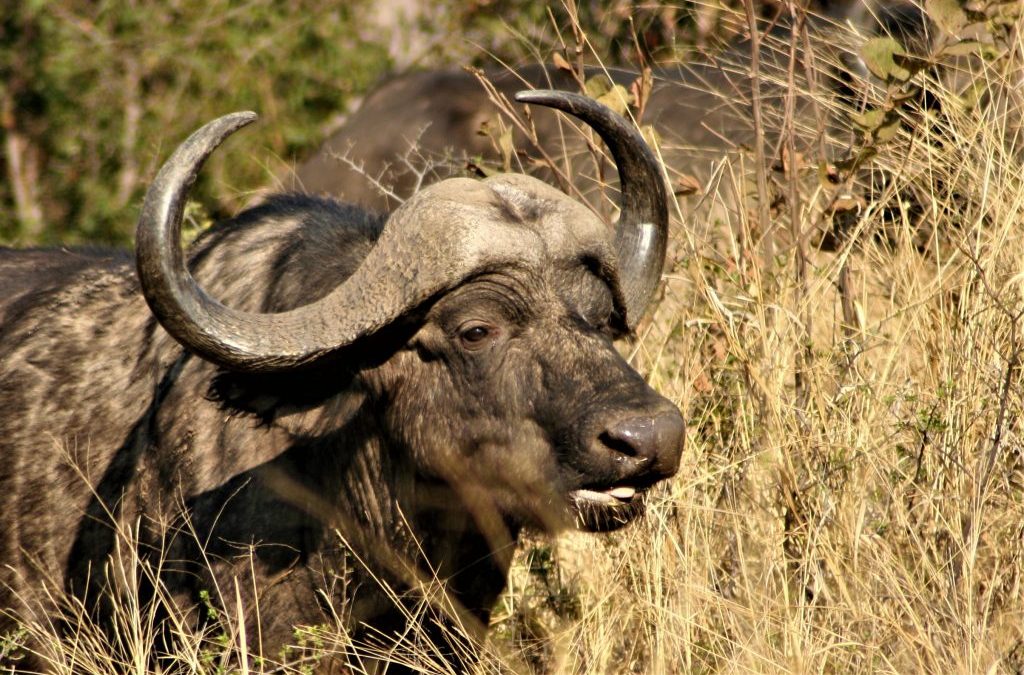
Hunting, once a daily practice of gathering food for the family or village, is now a real controversy among environmental advocates.
Wildlife Conservation is the practice of protecting wild species and their habitats, in order to prevent species from becoming extinct. Now that we have this definition, where does hunting fit into this explanation?
Hunting in Africa has been around since the dawn of humanity on the continent and this “hunter” role was fulfilled by the men in the tribe, to provide for their villages and families. Some indigenous African tribes still live like their ancestors did and are hunter-gatherers, with some now keeping livestock as well.
When the first explorers came to the Dark Continent, hunting was still done mainly for food, but also for ivory. Hunting has since then evolved into an activity enjoyed by thousands. Hunting is now being done for food, for management of game numbers, and more “controversially” for trophy hunting. I say “controversially” as I understand the influence that all forms of hunting have on conservation.
“In a civilized and cultivated country wild animals only continue to exist at all when preserved by sportsmen. The excellent people who protest against all hunting, and consider sportsmen as enemies of wild life, are ignorant of the fact that in reality the genuine sportsman is by all odds the most important factor in keeping the larger and more valuable wild creatures from total extermination”
– Teddy Roosevelt
I’m writing this article in conjunction with a video produced by Paul Stones, a professional hunter and Managing Director at Paul Stones Safaris Africa (https://www.paulstonessa.co.za/). In the video, Paul talks about the difference between the real Africa, and the Africa that the people from other countries want. This video / article is one of the most well written cases on the impact that the uninformed individuals and anti-hunting organisations have on the conservation efforts in Africa.
One thing that does not separate conservation from any other activity in the world is money. Money is required to fund anti-poaching campaigns, to buy food for the animals during periods of prolonged drought, to pay the people that work from dusk to dawn on these farms and concessions, to protect these unspoiled habitats, and the vast array of animals to whom it is home.
This is where hunting forms the key to conservation in Africa. Hunting for food, management of game numbers and yes, trophy hunting lays the foundation for the protection of the remaining unspoiled and pristine habitats that remain in Africa. These practices supply the crucial funding that pays for the above-mentioned campaigns, employees and other conservation efforts. But the problem that I have with modern society is that each person wants his or her opinion to be heard and that if they think it’s wrong then it is only their opinion that matters. It does not matter if they know anything about the practice or if other people depend on it for their livelihood.
The problem with the people and companies that campaign against hunting and paint it as a vile and barbaric sport, is that they are uninformed. These campaigns were started by people based on their emotions and it evolved into a smear campaign that utilises social media platforms, celebrity award events, protests, and unfortunately the emotions of misinformed people, to vilify hunting and spread lies about the true and important impact that hunting has on conservation efforts.
Since these campaigns have begun to become more personal, and more uninformed individuals have joined the cause, the following has happened: many major airlines have now banned animal trophies on their flights and individuals have cancelled hunting safaris, being afraid of the personal attacks that these organisations launch against them. Big game hunting was even banned in Botswana from 2014 until 2019.
As Paul says in his video, the uniformed people that reside in the United States, and other first world countries, have no idea of the real Africa. They know the Kruger National Park and the vast plains of the Masai Mara; and yes, these places are amazing, but the real Africa is where people like Paul are trying their best every day to protect the remaining wildlife habitats, the other places where normal tourists would not pay to be.
The facts are that the world has evolved over the centuries and human populations have grown and expanded, and with expansion, habitats have been lost entirely or isolated pockets are left. Hunting, especially trophy hunting, provides food to local villages, money to the employees and people working in the industry and funding for conservation efforts. If these areas where not utilised for hunting then the animals will not be there either, this is mostly true of enclosed game farms in countries such as South Africa.
It is true that most people campaigning against hunting live in a materialistic society, spending most of their time on social media platforms, and not making the effort to really talk to people in the industry and obtain their views.
We cannot change what has happened in the past, but we can work together to create a better future. Africa needs hunting, otherwise, as Paul said, with the demise of sustainable hunting, the animals of Africa will soon follow. Ill-informed people campaigning against hunting will be the reason that the very animals that they are trying to protect, go extinct.
I want to invite anyone, including organisations, that are willing to have an honest debate regarding this, to please contact me and together we can create a sustainable way forward for the protection of the amazing animals and biodiversity that Africa has to offer.
Thank you
Zander Liebenberg

Considering the overwhelming facts hunting is the key component that ensures Africa keep its remaining wildlife populations as is.
There recently was an article released comparing the number of elephants killed in Botswana pre- and post 2014. The number of animals poached increased in such a way that it is more beneficial for the population to keep profesional hunting oporations on going.
The only sub specie of giraffe with a positive population curve is the one found in Southern Africa, the only part in Africa where big scale hunting consessions is still practiced.
Namibian wildlife population increased 500% since the instating of the privately owned wildlife policy, that give land owners the right to managage wildlife populations and be compensated for animals harvested. In the same time Kenya stopped all commercial hunting and its wildlive population decrease 70%.
The key to hunting as an conservational tool is it must be controlled and land owners and villagers must be included in the compensation.
I can list numerous examples here of chases where hunting were beneficial for wildlive populations. Hunting is always the reason and habitat fragmentation, deforestation and ubinisation is always excluded in any conservational debates.
Hunting if implemented correctly is one of the best methods to increase wildlive populations across Africa.